Wall Street Journal Op-Ed: Washington Deserves a Classical Stadium

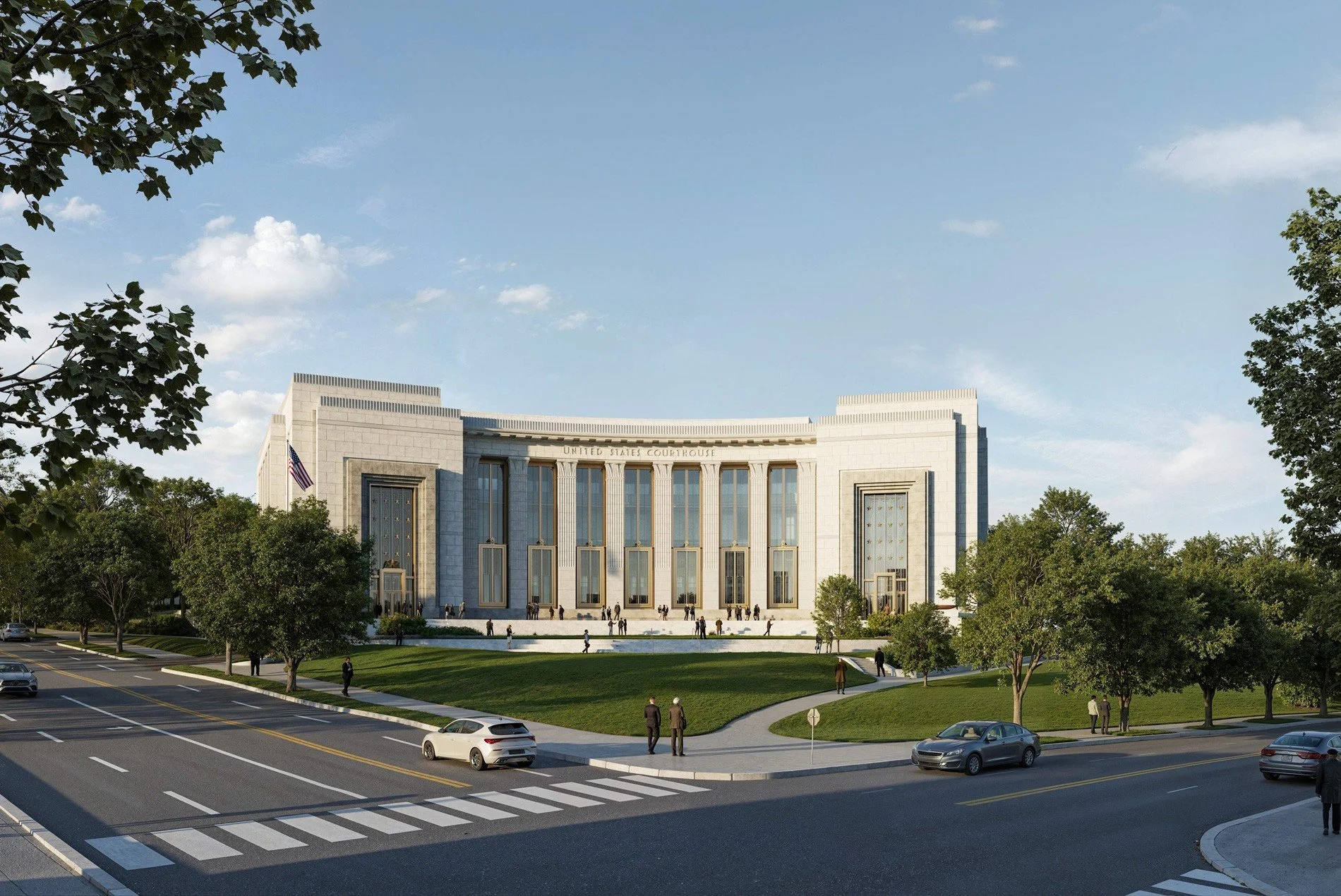
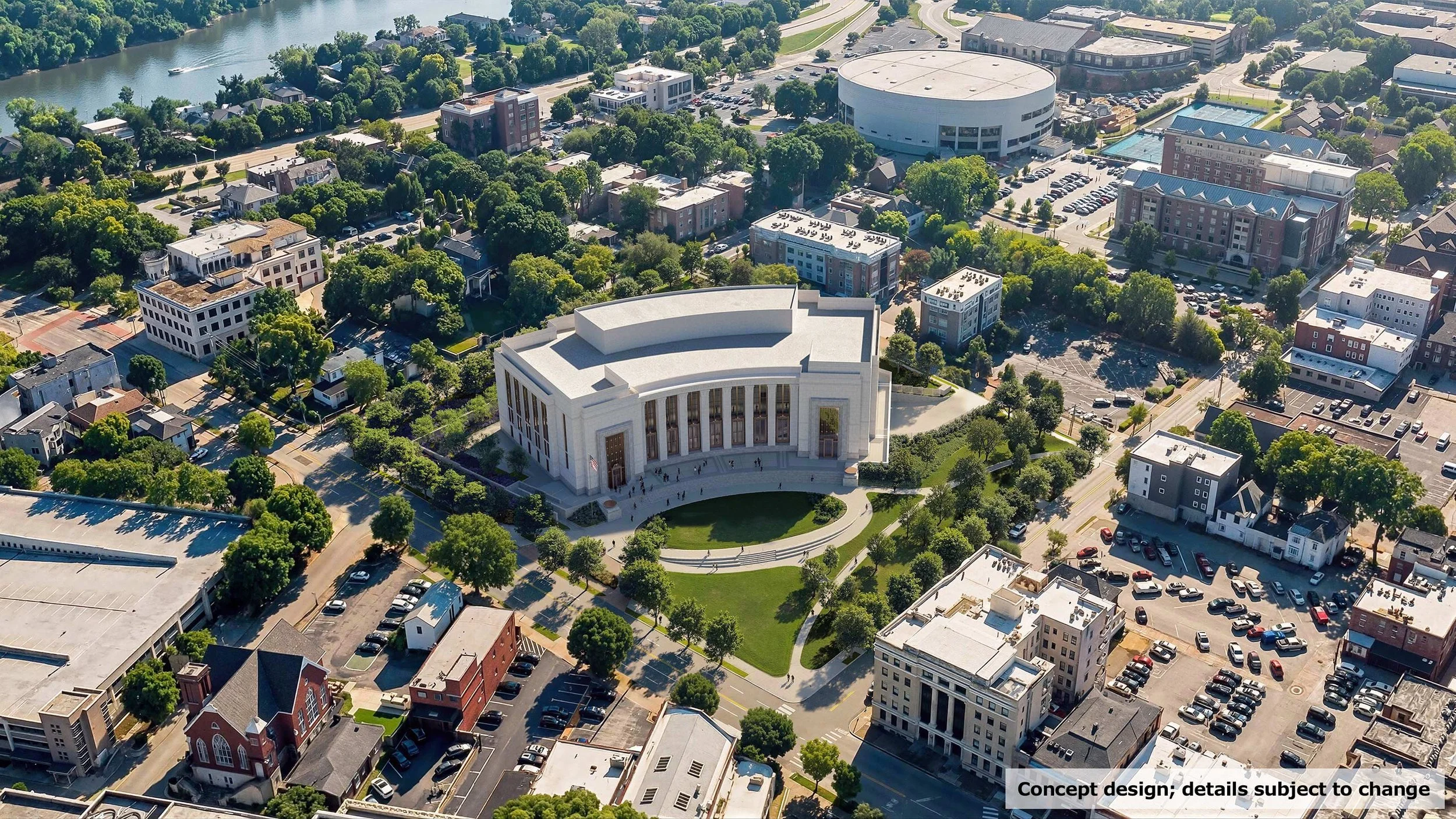
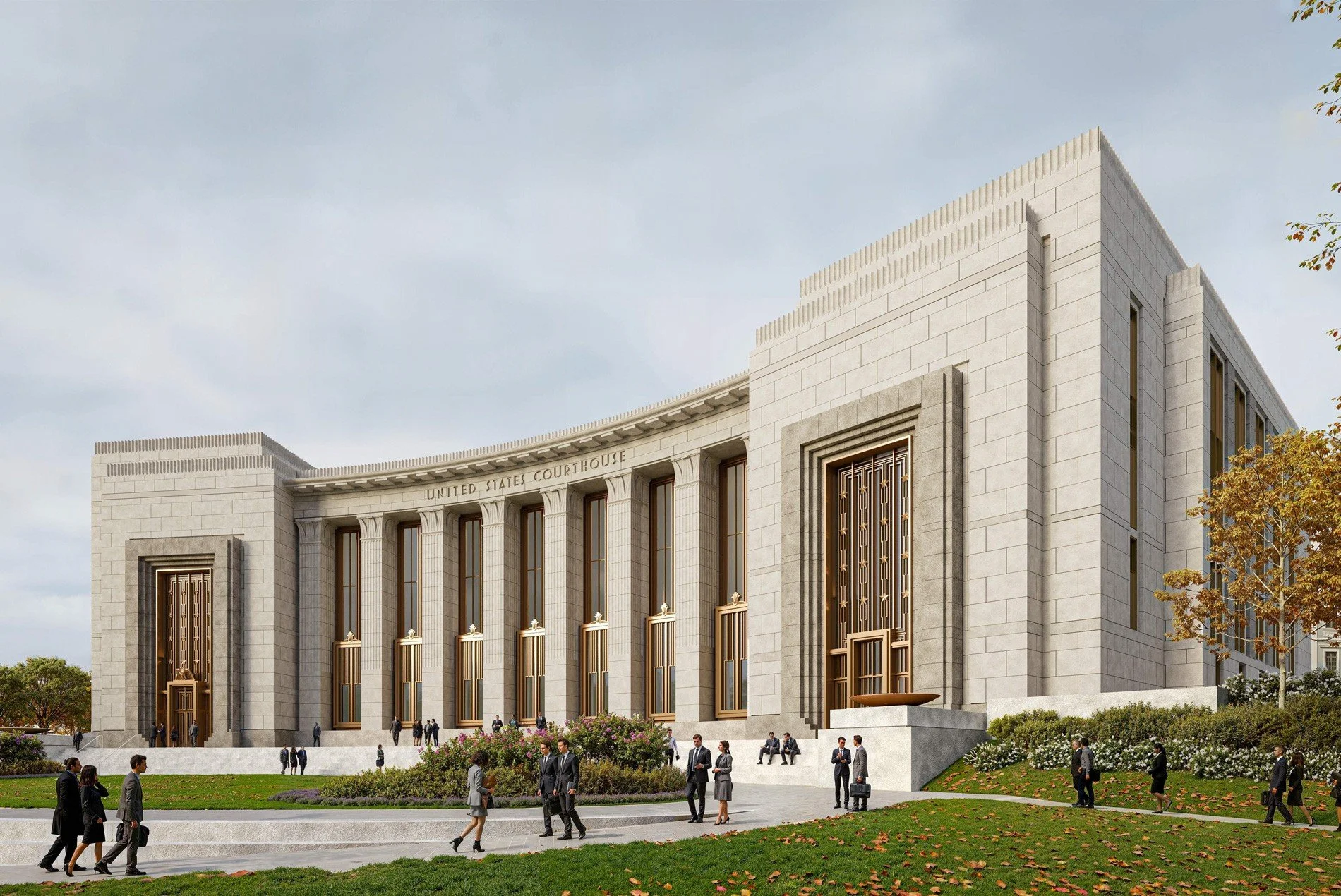
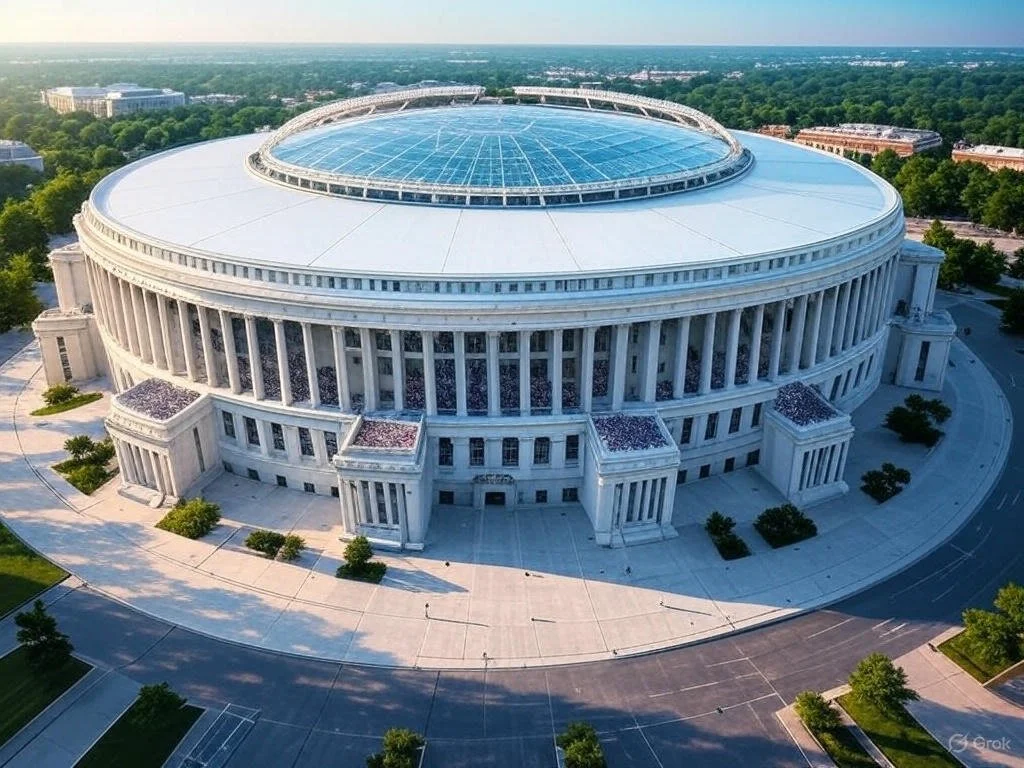
Suggestive AI-generated classical RFK Stadium. Credit: Leigh Wolf.

The Wall Street Journal today published an op-ed by National Civic Art Society president Justin Shubow in which he calls for the architecture of the new RFK Stadium in Washington, D.C. to be classical. His piece begins:

The largest private development in the District of Columbia’s history is under way: a new Robert F. Kennedy Stadium that will be home to the Commanders football team. At an estimated cost of $3.8 billion, it will replace the rusting, abandoned hulk that sits at the east end of East Capitol Street, fronting the Anacostia River. Given the stadium’s prime location, President Trump said the replacement is “going to be an architect’s dream.”

During a National Capital Planning Commission meeting last month, White House staff secretary Will Scharf said that he hopes the structure “incorporates architectural features in keeping with the capital more generally—classical, neoclassical elements that will align it with the capital that it will essentially overlook.”

I hope so too. The project offers a once-in-a-century opportunity for Washington to achieve its potential as a classical city inspired by Republican Rome—the intent of George Washington and Thomas Jefferson. . . .

You can continue reading the piece here at The Wall Street Journal.

Statement from NCAS President Justin Shubow Regarding Grand Penn's Selection as a Finalist to Design and Build a New Penn Station

According to NCAS president Justin Shubow, "The National Civic Art Society is ecstatic that Amtrak has shortlisted Grand Penn Partners (Macquarie) to design and build a new Pennsylvania Station in New York City. Grand Penn is proposing a magnificent classical design for the depot that evokes the beloved original Beaux-Arts structure, and which will instill civic pride in all who visit and use it. Grand Penn promises a modern, world-class transit hub with a soaring new train hall, public park, and improved passenger experience.  At the same time, the scheme provides a solution for Madison Square Garden, the sports arena that squats over the station and that is a major safety hazard (egress, ventilation, etc.). Under the Grand Penn plan, a new state-of-the-art MSG will be constructed across Seventh Avenue to the east/northeast. It will be a major improvement over the current arena, which dates from the LBJ administration.

"That the Macquarie Group, the world's largest infrastructure asset manager, is backing the Grand Penn proposal shows just how superior the scheme is. The National Civic Art Society is proud that our original idea for a new classical station--which we began campaigning for over 10 years ago--is closer to fruition than ever. Amtrak, under the leadership of Andy Byford, is to be commended for its latest move."

A June 2025 Politico article detailing NCAS's efforts regarding Penn Station can be found here.

NCAS President Justin Shubow to Speak at Yale Law School

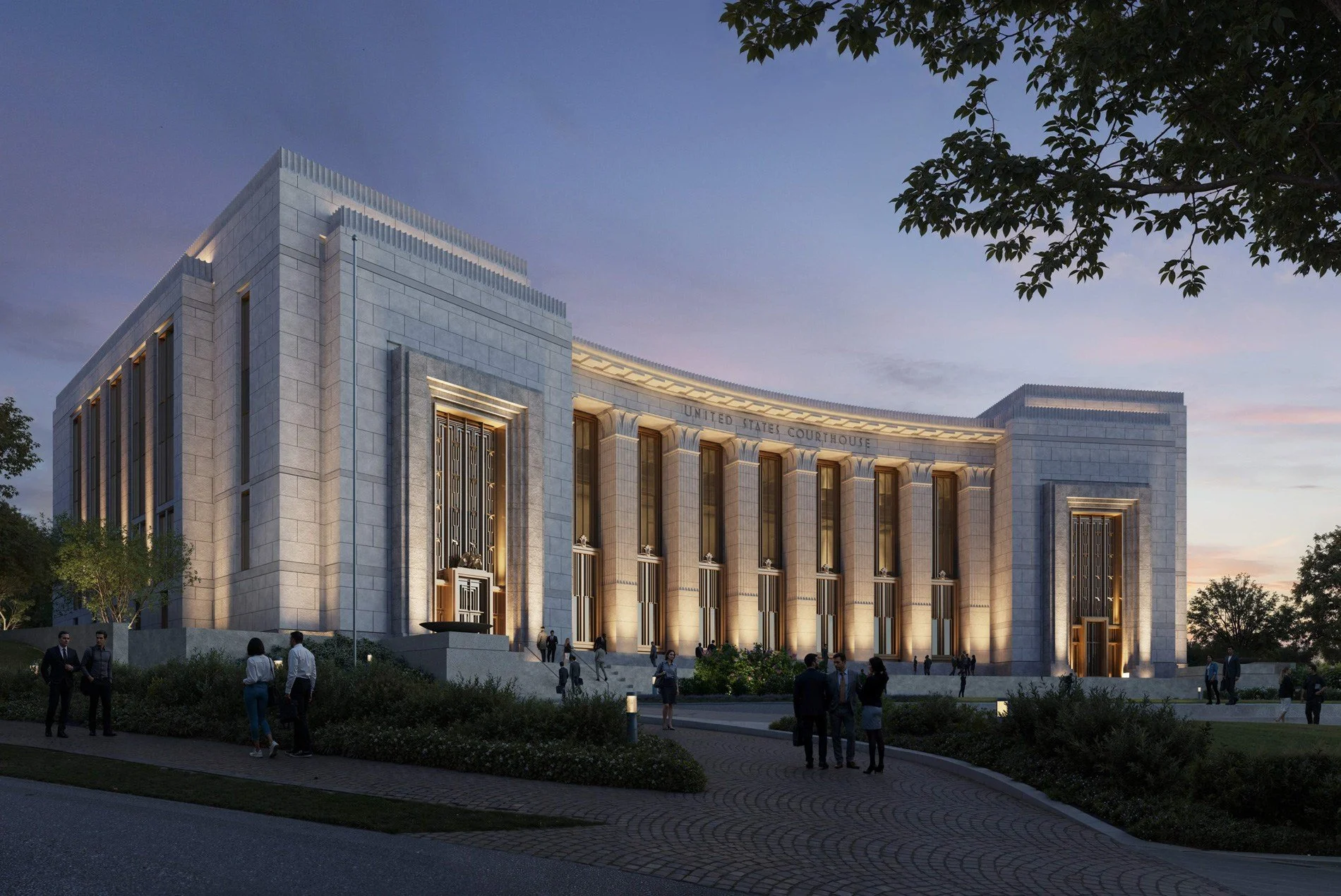
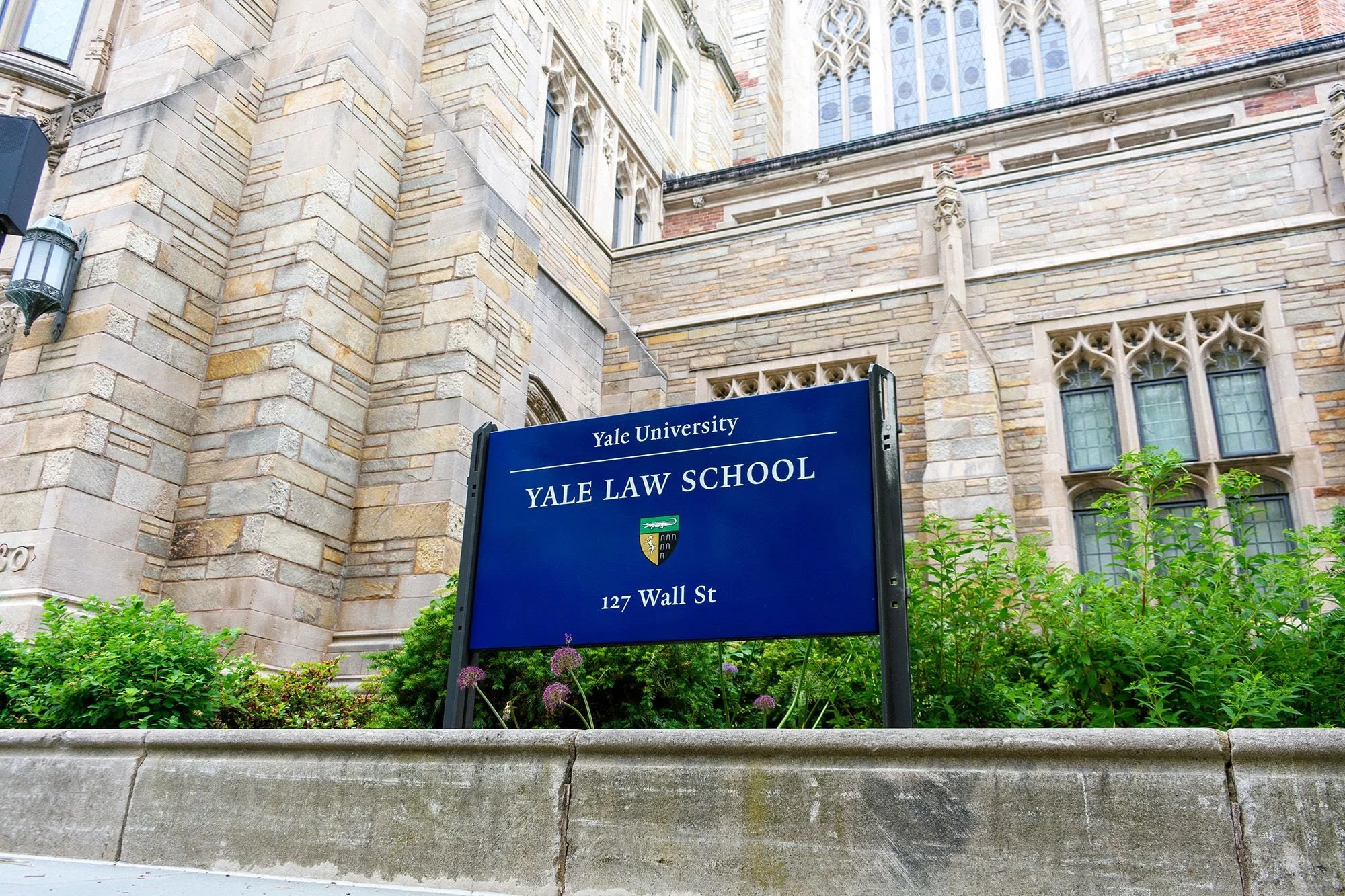
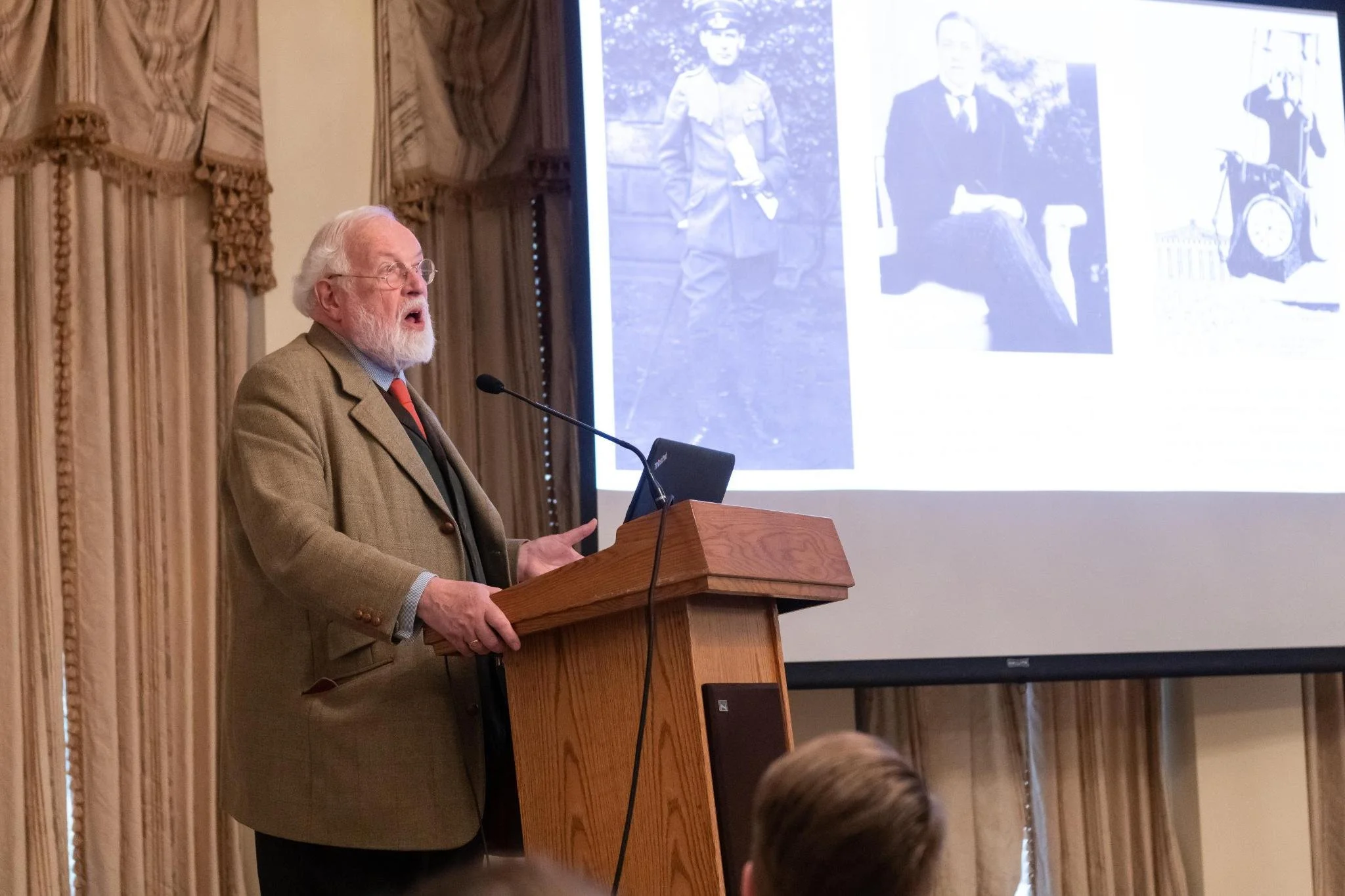
On Thursday January 22, 2026, National Civic Art Society president Justin Shubow will be giving a talk at Yale Law School sponsored by its Federalist Society chapter. His subject is "The Architecture of Democracy: The Return of Classicism in the Design of U.S. Courthouses and Federal Office Buildings." The event starts at noon and is free and open to the public.

The talk builds on Shubow’s recent writing on civic architecture, including his essay for the Jack Miller Center, “Building Citizens,” which examines how America’s classical public buildings have historically reinforced democratic ideals, as well as a recent article reflecting on the legacy of modern architecture and its effect on public culture. Together, these and other writings sit within his wider work to reform federal design standards and reorient public architecture toward civic meaning and permanence.

Justin Shubow Publishes Essay on Frank Gehry's Legacy and the Eisenhower Memorial

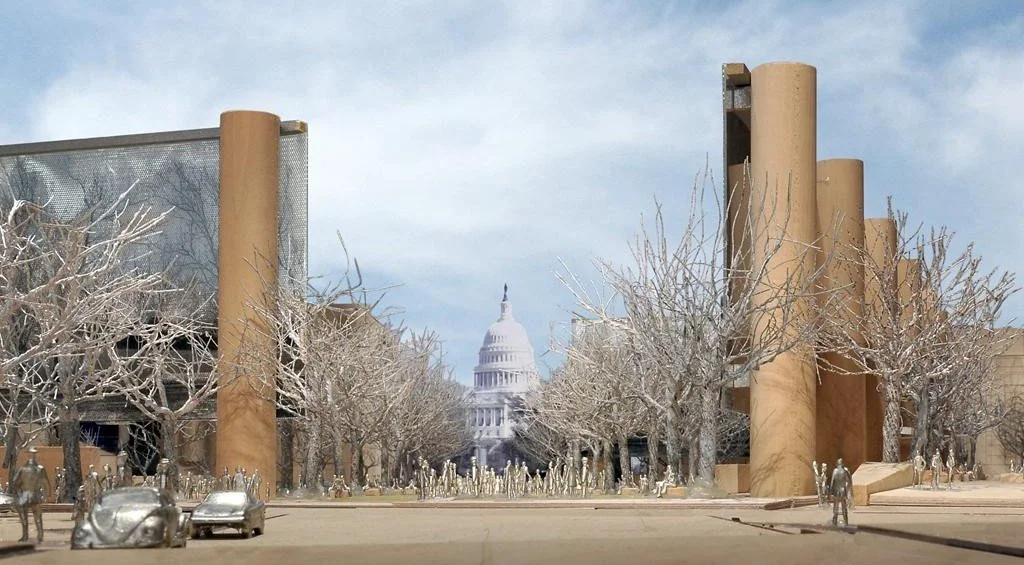
Frank Gehry’s Original Design for the Eisenhower Memorial

On December 13, 2025, National Civic Art Society president Justin Shubow just published an essay in National Review on Frank Gehry's legacy, including the Eisenhower Memorial.  

As background: In 2011, NCAS launched and led a six-year campaign to stop Gehry’s design for the Eisenhower Memorial, located in Washington, D.C. Until NCAS’s initiative, the memorial had been flying under the radar and was a fait accompli. The Society brought the design to national and congressional attention.

NCAS published a 150-page report by Shubow on the design that detailed the flaws in the competition, design, and federal approval process. The report was quoted in a front-page story in The New York Times as well as by members of Congress. NCAS twice testified in the U.S. House of Representatives about the memorial, and published numerous articles about it. 

The organization also put on events (including with Susan Eisenhower, spokesperson for the family) and held a counter-competition for a classical alternative to Gehry’s design. For a RealClearPolitics article on NCAS's campaign, see here. For an academic article on the Eisenhower Memorial saga, including NCAS's role, see here

Shubow's essay begins:

Frank Gehry, the most famous and lauded architect in America, died last week at the age of 96. He exemplified the “starchitect,” a heady mix of celebrity, brand-name design, and signature aesthetics meant to wow. With perhaps false modesty, he complained about being “geniused to death.”

Shubow later writes:

Art and architecture was for Gehry a form of self-expression, which explains why he was such a poor choice for his only completed project in Washington, D.C.: the National Eisenhower Memorial. Gehry the self-portraitist agreed to take on the task of capturing the essence of someone else, someone far different. It was an odd pairing. The flamboyant Southern Californian was required to lionize a stolid Midwesterner who hated modern art. Just as bad, the purveyor of architectural chaos was working in a city hallmarked by classical order. . . .

Ultimately, Gehry was forced to remove the two smaller tapestries (leaving two free-standing cylinders like smokestacks) but threatened to strip his name from the memorial if the main tapestry was eliminated. He also added figurative statues to his design: wooden, hyper-literal tableaus of Eisenhower as president and Supreme Allied Commander. The barefoot boy was replaced by a statue of a teenage Eisenhower, with odd orangutan proportions, shunted off to a corner. . . .

When you visit the memorial during the day, the image on the tapestry — a scribble scrabble sketch by Gehry himself—is not even apparent. At
night, when the screen is illuminated, it is impossible to tell what is depicted other than abstract expressionism with Gehry’s “signature” hand-drawing on it.

Reviews of the memorial have not been kind.
New York magazine’s Justin Davidson, despite being highly sympathetic to Gehry’s oeuvre, called the design “a wan anticlimax . . . a work of civic architecture that fails to quicken the patriotic pulse or add much to the landscape of memory in downtown D.C.” Edward Rothstein likewise panned the design in the Wall Street Journal: “Some objects are inflated beyond all significance; others are so diminished they seem afterthoughts.”
 
But the most important review is the saddest one: Few people ever visit the memorial, despite its prime location across the street from the National Mall and Air and Space Museum, which gets 3 million visitors a year.
 
In his otherwise idolizing biography of Gehry, Paul Goldberger, addressing the memorial fight, wrote that the architect “felt few people in the architecture community seemed willing to defend him. . . . Frank, anxious as ever about his reputation, did not consider the possibility that many of his peers were simply not enamored of the memorial design, and that it was their architectural judgment, not any lack of loyalty, that was preventing them from speaking out. For all his lifelong worry about what people thought of him, it did not occur to him that the architects he respected, and who he knew respected him, might have simply viewed this one as a miss, as one of those moments when Babe Ruth strikes out.”


Read the full article HERE.

Justin Shubow, Kate Wagner, and Edwin Heathcote Discuss Classicism Now at the Venice Biennale

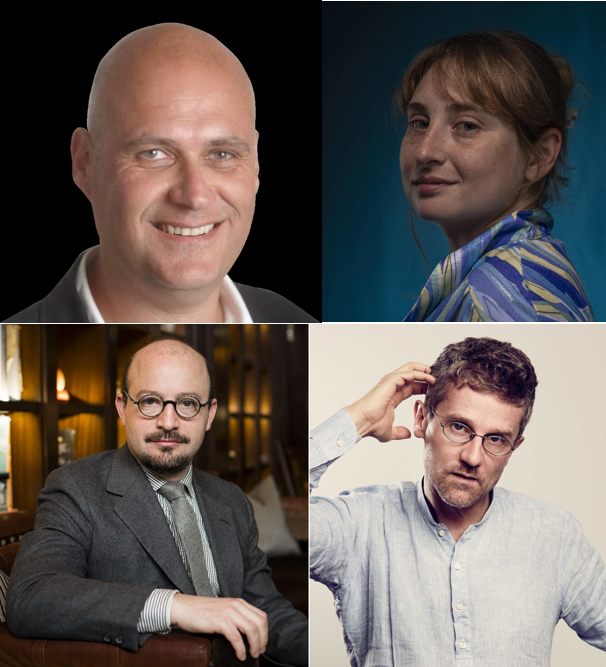
On November 22, 2025, as a part of the Venice Biennale, National Civic Art Society president Justin Shubow joined Edwin Heathcote and Kate Wagner and for a revealing public discussion on American federal architecture. Heathcote is the architecture critic for the Financial Times, while Wagner is architecture critic for The Nation and the author of the McMansion Hell blog. The Biennale's curator Carlo Ratti moderated the conversation, which grappled with the classical roots of American civic design, the meaning of architectural symbolism in public life, and whether beauty matters.

You can find the video HERE and transcript HERE.

At one point, Shubow said, "Edwin, I think you recently wrote about how at certain architecture schools, it's considered bourgeois to even design a building. I don't know if the public understands just what is going on in architecture schools. People are not learning how to design beautiful buildings. Is beauty even considered something important at all? I don't know. I think there's a huge problem here, and there are only a few schools, at least in America, that are actually teaching the sorts of architecture that makes the world a more beautiful place."

Heathcote responded, "So beauty is not part of the discourse in architecture, in literature, in art. I think probably in any cultural sphere now, beauty is not really talked about, because it's problematic. Whose beauty, I think, is the problem. So it's not just architecture, it's contemporary culture. Now you may say that's, I actually think it's probably quite a good thing we don't dwell too much on beauty in the same way that if you talk too much about beautiful people, then ugly people begin to get offended. I think it's very problematic as an idea, but I'm open to be persuaded."

What made the exchange so revealing was that all participants acknowledged an admiration for classical forms. The real point of contention emerged over the political anxieties and cultural signaling that buildings have come to carry rather than their aesthetic merits.

Interestingly, all of the panelists endorsed Art Deco, which Shubow said was the last of the classical styles. Heathcote and Wagner insisted it was modernist. Shubow responded, "The modernists [of the period] absolutely hated Art Deco. They called it the jazz style. They thought it was bourgeois. . . . It was completely ignored from their histories of what they called modern architecture. So maybe Art Deco, like a neo-Art Deco, is something that we can all get behind."

Watch the video HERE.

Edwin Heathcote, Carlo Ratti, Justin Shubow, and Kate Wagner to Discuss “Classicism Now”

On Saturday November 22, Edwin Heathcote, Carlo Ratti, Justin Shubow, and Kate Wagner will be discussing “Classicism Now” at a livestreamed event with audience Q&A.

This conversation was prompted by an op-ed by Carlo Ratti in the Financial Times as a response to the White House's Executive Order on federal architecture, and Justin Shubow and Norman Foster’s subsequent follow ups. Using this exchange as a point of departure, the panel will explore what such debates reveal about the status of classicism in contemporary architectural culture and practice, bringing together essayist and architecture critic Kate Wagner, architecture critic and classicism advocate Justin Shubow, and designer and architecture critic Edwin Heathcote in a discussion moderated by Carlo Ratti.

The event will be livestreamed from 11:00 am to 12:30 pm EST on Zoom and Instagram Live.

Zoom link: https://us06web.zoom.us/j/88560838325 .

Instagram Live: @crassociati - https://www.instagram.com/crassociati/ .

Other time zones: 

Venice / Rome: 5:00 pm – 6:30 pm CET
London: 4:00 pm – 5:30 pm  
Chicago: 10:00 am – 11:30 am

 About the participants:

Edwin Heathcote is the architecture critic for the Financial Times.

Carlo Ratti is an Italian architect and professor at the Massachusetts Institute of Technology, where he directs the MIT Senseable City Lab. He is the curator of the Biennale Architettura 2025.

Justin Shubow is president of the National Civic Art Society, a nonprofit organization headquartered in Washington, D.C. He is former chairman of the U.S. Commission of Fine Arts.

Kate Wagner is the author of the McMansion Hell blog and is the architecture critic for The Nation.  

NCAS President Justin Shubow in the Jack Miller Center's Civics Magazine

House Raising by William P. Chappel (1870s)

What can our public buildings teach us about citizenship?

In the article "Building Citizens," NCAS President Justin Shubow explores for the Jack Miller Center how architecture shapes civic life and reflects the ideals of a self-governing people. From Thomas Jefferson's vision of the U.S. Capitol as "the first temple dedicated to the sovereignty of the people" to the enduring beauty of America's classical monuments, Shubow traces how design has long served as a form of civic education.

He also asks what happens when beauty and meaning disappear from our built environment and, more importantly, why Americans still overwhelmingly prefer traditional, dignified architecture for their public spaces. As Shubow writes, quoting Jefferson, "Design activity and political thought are indivisible."

Read the full essay in the Fall 2025 issue of Civics Magazine exploring the theme "Our Lives, Our Fortunes, and Our Sacred Honor: Unexpected Contentions for Civic Education."

NCAS President Justin Shubow Speaks at ISI Homecoming Weekend

Daniel McCarthy and Justin Shubow at ISI’s Homecoming Weekend Roundtable.

In September, NCAS President Justin Shubow participated in the Intercollegiate Studies Institute’s Homecoming Weekend as part of a roundtable discussion titled Golden Age Mindset: Restoring Western Civilization. He spoke alongside Heritage Foundation President Kevin Roberts, British author Mary Harrington, ISI President Johnny Burtka, philosopher Phillip Blond, and Modern Age Editor-in-Chief Daniel McCarthy, among others.

Shubow reflected on the importance of the present moment, pointing to President Trump’s recent actions on federal architecture as a pivotal development. Through his Executive Order, Making Federal Buildings Beautiful Again, the President reaffirmed that the United States remains the same regime established at the Founding, more than two centuries ago. Such a continuity stands in contrast to nations like France, now in its fifth republic.

He noted a parallel renewal in the nation’s civic monuments. In recent decades, memorial design has too often emphasized victimhood rather than valor. The Flight 93 Memorial in Pennsylvania, he observed, offers no tribute to the passengers who heroically prevented the destruction of a key government building. By contrast, Sabin Howard’s magnificent World War I Memorial in Washington restores the heroic and narrative tradition, depicting courage, sacrifice, and the triumph of the human spirit.

The roundtable discussion of Golden Age Mindset: Restoring Western Civilization.

As Shubow concluded, “The greatest work of civic art in the modern era is the National Mall and the surrounding monumental core. This is not something we should take for granted. There are plenty of other world capitals that don’t have this kind of beauty or magnificence. The Mall is a sacred space, surrounded by luminous classical temples that serve as sites for commemoration and public life. … There’s nothing more thrilling than flying into Reagan Airport and seeing the layout of the entire Mall. It hasn’t been there forever, but it feels as though it has—and it makes you feel that America will last forever.

You can watch the entire discussion here on YouTube.

Carlo Ratti and Justin Shubow to Participate in "Making Federal Architecture Beautiful Again: A Debate" at the 19th International Architecture Exhibition of La Biennale di Venezia

Justin Shubow Carlo Ratti Venice Architecture Biennale Debate

On October 25, 2025, Carlo Ratti and Justin Shubow will be participating in the workshop titled “Making Federal Architecture Beautiful Again: A Debate” at the Biennale Architettura 2025 in Venice, Italy.

The event, which is part of the Public Programme of the 19th International Architecture Exhibition of La Biennale di Venezia, will take place at 16:00 at the Speakers’ Corner in the Corderie dell’Arsenale.

The discussion will delve into the ongoing debate between classical and experimental architecture, exploring the role of aesthetics in civic structures. Ratti and Shubow will examine how public input and innovative design can shape our built environment, fostering legibility, dignity, and lasting quality in federal buildings. The conversation aims to bridge traditional preferences with contemporary approaches, sparking new ideas for the future of public architecture.

The curator of the Biennale Architettura 2025, Ratti is an Italian architect and professor at the Massachusetts Institute of Technology, where he directs the MIT Senseable City Lab.

Shubow is president of the National Civic Art Society, a nonprofit organization headquartered in Washington, D.C. He is former chairman of the U.S. Commission of Fine Arts.

This event stems from a recent exchange between the speakers in the Financial Times that began with an op-ed by Ratti titled “Don’t Make Federal Architecture Beautiful Again.” Shubow responded with a letter to the editor, “Jefferson Is the President’s American Architecture Idol,” which in turn prompted a letter by architect Norman Foster, “Aesthetic Excellence in Architecture Is Not a Question of Styles.”

To access the Corderie dell’Arsenale and the Speakers’ Corner, visitors must hold a valid exhibition ticket for the Biennale Architettura 2025.

NCAS President Justin Shubow Speaks on “The Architect as nation-Builder”

On September 3, 2025, NCAS president Justin Shubow addressed the fifth National Conservatism Conference on the need to recover a once-central understanding of architecture’s role in public life. His talk, “The Architect as Nation-Builder,” explored how America’s civic ideals were given enduring physical form through the nation’s public architecture.

Thomas Jefferson, George Washington, and their successors deliberately turned to the classical tradition to give visible form to the nation’s democratic aspirations. From the Virginia Capitol to the McMillan Plan to the U.S. Supreme Court, they treated architecture as a civic language capable of shaping citizens’ affections and loyalties; a responsibility largely forgotten in today’s official architecture.

Shubow quoted Cass Gilbert, architect of the Supreme Court, on the underlying philosophy of his work:

"It is an inspiration toward patriotism and good citizenship, it encourages just pride in the state, and is an education to on-coming generations to see these things, imponderable elements of life and character, set before the people for their enjoyment and betterment.... It is a symbol of the civilization, culture and ideals of our country."

Shubow commented, "It was Gilbert himself who was responsible for the phrase above the entrance to the Supreme Court: 'Equal justice under law.' Those words have become a famous tag line for the court, but it was the idea of the architect—a true nation-builder."

You can watch the full speech on YouTube.

NCAS's Letter in the Financial Times: Jefferson Is the President’s American Architecture Idol

On September 12, 2025, the Financial Times published a letter to the editor by National Civic Art Society president Justin Shubow:

***

In “Don’t make federal architecture beautiful again” (Opinion, Life & Arts, September 6), Carlo Ratti argues that President Donald Trump is wrong to reorient federal architecture in a classical and traditional direction since what America needs are experimental, “sustainable” new buildings.

He alludes to the reasons the founding fathers embraced the classical tradition. However, Ratti fails to understand that the founders looked forwards while simultaneously looking backwards (as they did in political philosophy). For instance, Thomas Jefferson designed the Virginia Capitol, one of the most important American buildings of his time, as a close imitation of an ancient Roman temple, the Maison Carrée in Nîmes, in southern France.

Focusing on technological innovation and the use of new materials, Ratti downplays the significance of aesthetics. One of Jefferson’s foremost reasons for choosing classical exemplars for the new nation was their beauty, which he said had the “approbation of thousands of years”.

In claiming that classical architecture is wrong for the modern era, Ratti also completely skips over the Beaux-Arts era in government buildings, which produced some of the most iconic, beloved structures in the country. The US Supreme Court, National Archives, and Jefferson Memorial — all completed in the 1930s and 1940s — are classical temples, not experimental designs.

Would it have been better that these had been constructed in the International Style, the avant-garde fashion of the time?

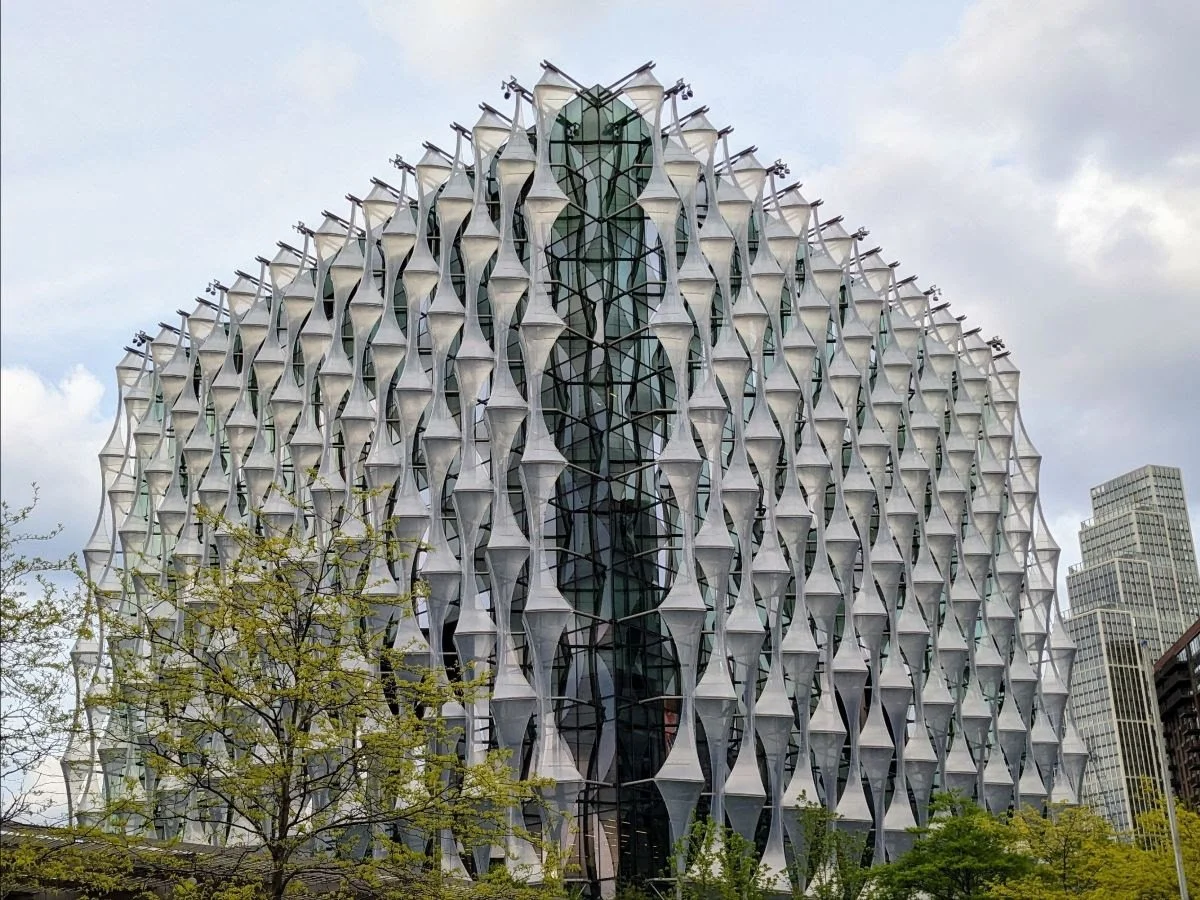
Aesthetics and symbolism particularly matter in government buildings since they physically embody the continuity of the nation’s values. I played a key role in promoting the ideas underlying Trump’s recent executive order, and have often said the common person is not ennobled or inspired by a “sustainable” building that looks like an alien spacecraft, such as the San Francisco federal building or Salt Lake City’s United States Courthouse.

And ironically, traditional architecture is in fact highly sustainable. Traditional buildings have longer life-cycles than modernist ones and require less energy to produce.

Moreover, architectural experimentation makes least sense in government designs, aesthetically or functionally. The US courthouse in Phoenix, Arizona, for example, which was completed in 2000, is precisely that — an “innovative” glass box in the desert that gets scorchingly hot inside.

Justin Shubow
President, National Civic Art Society 
Former chairman of the US Commission of Fine Arts
Washington, DC. US

National Civic Art Society Hails President Donald Trump for Issuing Executive Order Beautifying Federal Buildings

The National Civic Art Society hails President Donald Trump for issuing his new Executive Order “Making Federal Architecture Great Again” today. The EO states that there must be a preference for classical and traditional architecture (both broadly defined) when the government is choosing designs for federal buildings and U.S. courthouses. The EO is strongest regarding Washington, D.C., requiring that new federal buildings there be classical. 

The Order also amends the 1962 Guiding Principles for Federal Architecture, which de facto made Modernism official. As of 2020, under the current design program at GSA, which began in 1994, and which treats the Guiding Principles as holy writ, no more than 10% of the buildings constructed have been classical or traditional. 

NCAS president Justin Shubow said:

“President Trump is to be commended for requiring that new federal buildings be noble, beautiful, and admired by the general public. As the Executive Order recognizes, and as our organization has long been advocating, classical public architecture architecture is time-honored, timeless, and the mode most associated with our national values and form of government. It is quite simply the architecture of American democracy.”

Shubow continued, “Revising the 1962 Guiding Principles for Federal Architecture is a monumental development. Those principles, issued in a mere White House report on government office space, replaced official classicism (which began with George Washington and Thomas Jefferson) with de facto official modernism, and abdicated authority from the government to the (modernist) architectural establishment. According to those Principles, ‘Design must flow from the architectural profession to the Government, and not vice versa.’ The new Executive Order reverses this, placing the government—and ultimately the American people—in charge.”

President Trump Hires National Civic Art Society Board Member to Design New White House Ballroom

James McCrery, a classical architect who is a co-founder of the National Civic Art Society and a member of our Board of Directors, has been chosen by President Donald Trump to design a new ballroom at the White House.

According to the administration, “The White House State Ballroom will be a much-needed and exquisite addition of approximately 90,000 total square feet of ornately designed and carefully crafted space, with a seated capacity of 650 people — a significant increase from the 200-person seated capacity in the East Room of the White House.”

McCrery, who is principal and founder of McCrery Architects in Washington, D.C., is associate professor at the Catholic University of America's School of Architecture. He was a commissioner on the U.S. Commission of Fine Arts, appointed by President Trump during his first term. McCrery served alongside NCAS President Justin Shubow, who was chairman of the Commission.

According to Shubow, “The National Civic Art Society is ecstatic that President Trump selected James McCrery to design the new White House ballroom. McCrery is one of the best architects in America, and he will honor and respect one of the most beloved classical buildings in the United States. Our organization has no doubt he’ll design a beautiful, fitting addition. It was President Theodore Roosevelt who personally chose Beaux-Arts architect Charles McKim to renovate the White House in his time. President Trump has made an equally wise decision in hiring McCrery.”

NCAS Fellow Explores the Soulless City

Aerial photo of Milton Keynes, UK

In City Journal, National Civic Art Society Research Fellow Theodore Dalrymple returns to Milton Keynes, the British city born of 1960s modernist planning ideals. Conceived as a rational response to urban crowding, it was built on the belief that the right grid, traffic pattern, and housing formula could engineer a better society. What Dalrymple finds instead is a city defined by absence: no real streets, little civic life, and a landscape that feels more measured than lived in.

Dalrymple traces the logic that shaped Milton Keynes—wide roads, subdued buildings, and a deliberate avoidance of tradition—and considers the psychological effects of life in a place built without memory. The city's form, he argues, reflects a worldview that replaces culture with calculation and treats citizens as units to be managed.

Yet amid the monotony, he encounters something unexpected. A local gallery hosts an exhibition of South Asian miniatures, offering a rare moment of depth and delight. Dalrymple's piece is both an exploration of a place and a reminder: even the most sterile environments cannot fully suppress the human need for beauty and meaning.

Read the full piece at City Journal.

Serpentine Court in Milton Keynes, UK

Politico on NCAS's Project to Build a New Classical Penn Station in New York

Proposed Train Hall

On June 17, 2025, Politico published an extensive news article, “The MAGA-Backed Plan to Make Penn Station Beautiful Again.” The piece begins:

***

In 2021, Justin Shubow, the president of the non-profit National Civic Art Society, approached a team of supporters with a starry-eyed vision: Renovate New York City’s Penn Station according to a grand neoclassical design. Shubow knew that the idea was a long shot. Generations of architects and urban planners had tried and failed to renovate the transit hub, whose maze of narrow corridors and dimly lit concourses regularly invites comparisons to a subterranean rats’ net.

But Shubow, a Columbia University-educated architectural critic with round-rimmed glasses and a carefully manicured goatee, thought it was important to try. During the first Trump administration, he had championed the revival of classical architecture as the chairman of the Commission of Fine Arts, and he wanted to bring the same aesthetic principles to bear on a new Penn Station — not just for the sake of the city’s harried commuters, but as a statement about the resurgent greatness of America in the Trump era.

“Classical architecture is the architecture of American democracy,” said Shubow, noting that the original Penn Station, with its imposing doric columns and soaring marble archways, was an exemplary model of classical design before it was demolished in 1963. “It is the architecture of civic virtue.

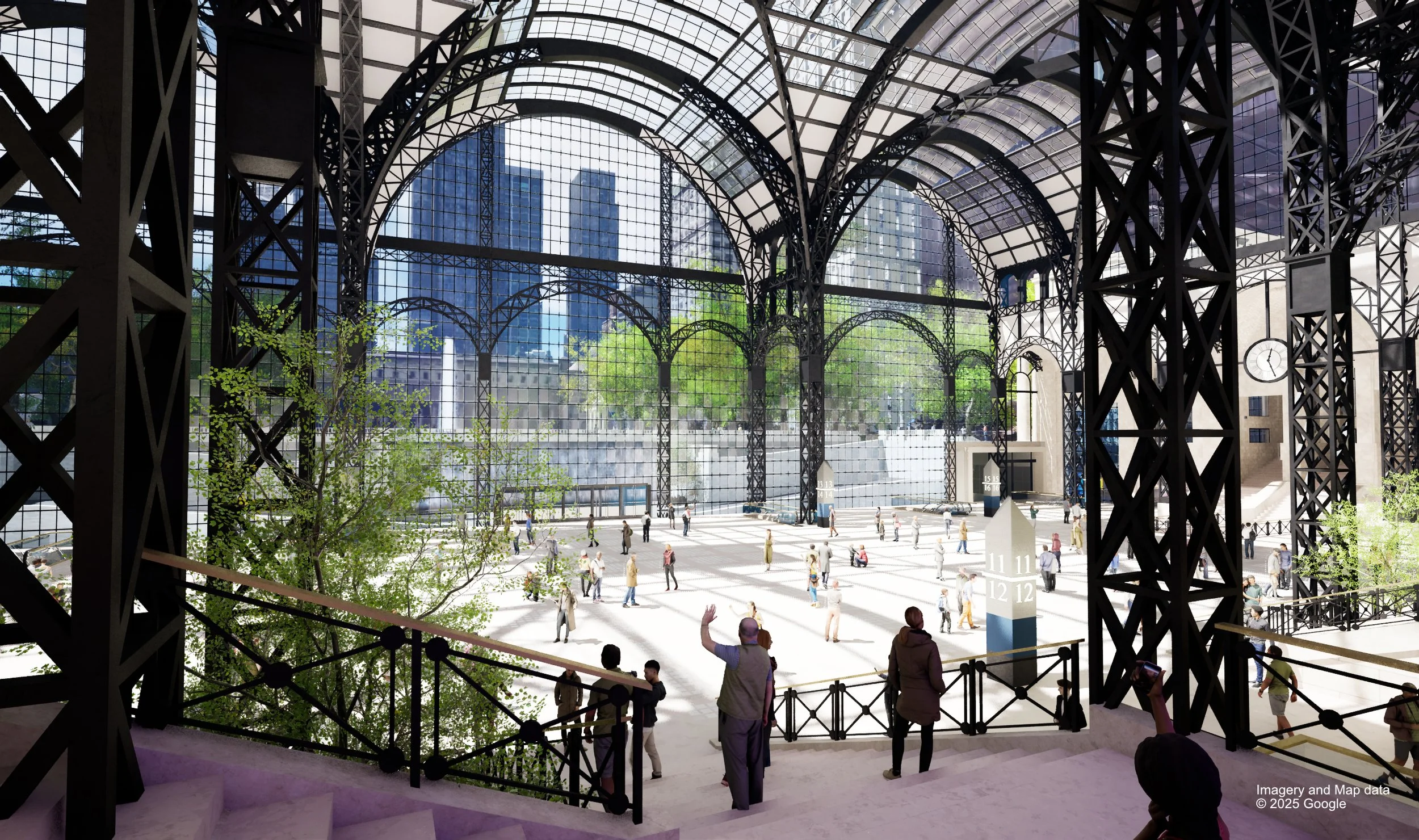
Shubow’s pitch found a receptive audience among his allies on the MAGA right. Tom Klingenstein, the Republican mega-donor and chair of the conservative think tank the Claremont Institute, quickly signed on as a chief financial backer. Over the next three years, a team led by the classical architect Alexandros Washburn spent hundreds of hours and over $3 million designing a plan — dubbed “Grand Penn” — to replace the existing station with a palatial new complex, complete with a glass-enclosed train hall, a 600,000-square-foot concourse, a public park and a new classical façade modeled on the pre-1963 station. On paper, the planers claim, the renovation would cost somewhere in the ballpark of $7.5 billion and could be completed by 2036.

But by the time the plan for Grand Penn plan was completed in late 2024, it was only lacking one thing: political muscle. Amid intractable fighting between the various city, state and federal authorities that claimed justification over station, Grand Penn remained little more than a blueprint on a shelf.

Then Donald Trump reentered the White House.

In April, Trump announced that his Department of Transportation would taking over a possible Penn Station renovation, wresting oversight of the project from embattled city and state authorities. The administration’s abrupt intervention was an extraordinary stroke of good luck for the team behind Grand Penn. Practically overnight, their plan for a classically inspired station went from a far-fetched conservative pipe dream to a real possibility. Although Trump’s Department of Transportation has not formally endorsed the plan, the plan’s architects have met with senior officials from DOT and the Federal Railroad Administration in recent months, and discussions between the two groups are ongoing, according to multiple people with knowledge of the discussions. (A spokesperson for DOT confirmed that FRA officials have met with the Grand Penn team, among other design firms.) In recent weeks, Trump has personally contacted Grand Penn’s backers to express interest in their design, said a person familiar with the situation who was granted anonymity to discuss private communications with the president.

“It seems that the stars might be aligning,” said Shubow, sounding a note of cautious optimism. . . .

Yet for the team behind the Grand Penn plan, the stakes of the battle go far beyond the station itself. In their eyes, a classical renovation of Penn Station could mark the first step in a broader aesthetic revolution — or, better yet, a counter-revolution — that would usher in a new wave of classical architecture befitting of Trump’s promised “golden age” in America. . . .

“Classical architecture is the philosophical manifestation of the theoretical founding of our regime,” said Klingenstein, a hedge-fund manager who donated over $10 million to Republican campaigns and causes in the latest election cycle. “The theory goes back to Rome and Greece. This is their — and, by adoption, our — architecture.”

Or, as Shubow has more succinctly put it, it’s time to “Make American Beautiful Again.” . . .

[D]uring his tenure in Washington, Trump has demonstrated at least some support for the architectural principles of ancient Athens and Rome. Toward the end of his first term in 2020, the president issued an executive order — supported by Shubow’s Commission of Fine Arts — directing the General Services Administration to defer to classical architectural aesthetics when designing new federal buildings. After the order was rescinded by the Biden administration, Trump issued a new presidential memo this past January reiterating the directive. . . .

“Building a fantastic new Penn Station with classical architecture would make a statement about American civilization in the same way that the rebuilding of Notre Dame in Paris said something about French civilization,” said Shubow, recalling Trump’s visit to the newly rebuilt gothic cathedral last December. “This project is so important that this could be one of the president’s biggest legacies.” . . .

In a statement, the [Trump] administration echoed Grand Penn’s grandiose ambitions: “Once-iconic gems of America’s infrastructure like New York’s Penn Station cannot continue to languish under incompetent leadership,” said White House spokesperson Kush Desai. “Restoring and revitalizing America’s infrastructure is a key priority for the Trump administration as part of our mandate to restore American Greatness.”

***

Read the full article at Politico.

NCAS President Justin Shubow Selected GSA Design Peer

Tuscaloosa Federal Building and U.S. Courthouse, Completed 2012

National Civic Art Society president Justin Shubow has been been selected by the U.S. General Services Administration (GSA) to serve on the National Registry of Peer Professionals. GSA is the government agency that builds and owns federal buildings and U.S. courthouses. Participating in the Design Excellence Program, Shubow joins a select group of experts in architecture, engineering, and construction who advise on the design and execution of federal building projects.

NCAS President Justin Shubow Featured on ARTE Regarding the Architecture of Washington, D.C.

On May 16th, European broadcaster ARTE interviewed Justin Shubow, president of the National Civic Art Society, for a Reportage segment on American politics. The discussion centered on the architecture of the nation’s capital and the civic ideals it expresses.

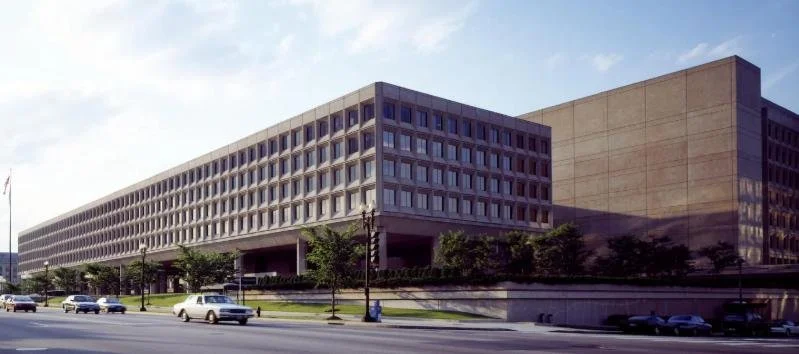
Shubow drew a sharp contrast between the city’s classical landmarks, such as the National Gallery of Art (a "modern" building completed in 1941), and the harsh, unpopular Brutalism of structures such as the Hirshhorn Museum and FBI Headquarters.

“This is a city inspired by ancient Rome," said Shubow, "meant to be a new Rome: a timeless republic that will never die.”

NCAS President featured on the Who Versus Podcast

Last week, National Civic Art Society President Justin Shubow appeared on the Who Versus podcast for a lively discussion about architecture, power, and the values embedded in our public buildings. What began as a discussion of Brutalism and the movie The Brutalist opened into a broader reflection on how architectural choices shape civic experience and reveal the assumptions behind them.

“Jonathan Meads, a BBC filmmaker, made this entire documentary defending Brutalism,” Shubow explained. “He said it’s sinister architecture representing a harsh time… that’s why he likes it.”

Some defenders of modernist design, Shubow explained, are candid about these effects and even admire the sense of unease such buildings can provoke. “They’re getting a thrill from this great threat that you get from some of these buildings that are overhanging you and look like they’re kind of going to crush you.”

That kind of clarity, co-host Phil Reboli noted, is what has set the National Civic Art Society apart. “I think you got on our radar back in 2016, '17, '18… people who wouldn’t otherwise care about art deeply cared about this thing in a way that I wasn’t expecting,” he said. 

Listen to the full episode at Apple Podcasts or watch at YouTube.

NCAS President Justin Shubow's Lecture on The City Beautiful Movement and Washington, D.C.

On April 24, 2025, National Civic Art Society President Justin Shubow delivered a lecture on “The City Beautiful Movement and Washington, D.C.” as part of the inaugural Teófilo Victoria Lecture Series, sponsored by the Florida chapter of the Institute of Classical Architecture & Art in collaboration with the Coral Gables Museum and National Civic Art Society. The talk took place at the aforementioned museum.

Poster by Rafael Portuondo

Shubow traced the origins and legacy of the 1901–1902 McMillan Plan—widely seen as the defining achievement of the City Beautiful movement—as it reinterpreted L’Enfant’s original vision for the capital. He detailed how the Plan replaced the Victorian landscaping of the National Mall with the Monumental Core we recognize today: a formal east-west axis anchored by classical buildings, civic memorials, and expansive public grounds. Conceived by the Senate Park Commission under Senator James McMillan, the Plan laid the groundwork for our most enduring landmarks such as the Lincoln Memorial, Union Station, and the Federal Triangle, while also advancing a vision of beauty, order, and civic dignity in the heart of the capital. Shubow concluded by raising a provocative question: what might a 21st-century City Beautiful movement look like, and could Washington, D.C. once again lead by design?

NCAS to Co-Sponsor Lecture on The City Beautiful Movement and Washington, D.C. by Justin Shubow

Proposed Washington Gardens and National Mall in the 1901-1902 McMillan Plan

The Institute of Classical Architecture & Art, Florida Chapter proudly presents, in collaboration with the Coral Gables Museum and National Civic Art Society, its inaugural Teofilo Victoria Lecture Series.

Lecture III: The City Beautiful Movement and Washington, D.C. by Justin Shubow

Thursday, April 24, 2025, 5:30-7:30pm
Venue: Coral Gables Museum (285 Aragon Ave., Coral Gables, Florida)


Cocktail Reception
5:30-6:15pm

Lecture
6:15-7:15pm, with Q&A to follow

1 credit towards the Certificate in Classical Architecture (Elective) | submitted for 1 AIA CES Learning Units 

The 1901-1902 McMillan Plan for Washington, D.C. was the first achievement, and arguably the apogee, of the City Beautiful movement. Furthering and reinterpreting the original L’Enfant Plan for the capital, the McMillan Plan replaced the Victorian landscaping of the National Mall with the east-west axis and Monumental Core as we know them: stately classical buildings and memorials and public grounds. The Plan, the creation of the Senate Park Commission chaired by Senator James McMillan, paved the way for and envisioned the Lincoln Memorial, Union Station, the Federal Triangle, and generous public parks. The Plan continues to underpin planning in the District of Columbia to so some degree, though some have called for a McMillan 2.0 to broaden the vision for the next century. What might a neo-City Beautiful plan look like?

Justin Shubow is President of the National Civic Art Society, a nonprofit organization headquartered in Washington, D.C. that promotes the classical  tradition in public art and architecture. He is former Chairman of the U.S. Commission of Fine Arts, an independent federal agency that is the aesthetic review board for Washington, D.C., to which he was appointed by the President. Shubow has testified in Congress on topics such as the future of the National Mall and the design of the Dwight D. Eisenhower Memorial. He is the author of The Gehry Towers over Eisenhower: The National Civic Art Society Report on the Eisenhower Memorial, a critical examination of the memorial’s competition, design, and agency approval. He has published architectural criticism in numerous outlets, and has delivered talks about architecture around the country and in Europe. Shubow received a B.A. from Columbia University, a J.D. from Yale Law School, and completed four years of study in the University of Michigan’s Ph.D. program in philosophy. He is a member of the Board of Advisors of the Roger Scruton Legacy Foundation and the Board of Academic Advisors of the Alexander Hamilton Institute for the Study of Western Civilization.

Register HERE.

National Mall in 1882. Note the train station to the immediate west of the Capitol.

1901-1902 McMillan Plan