
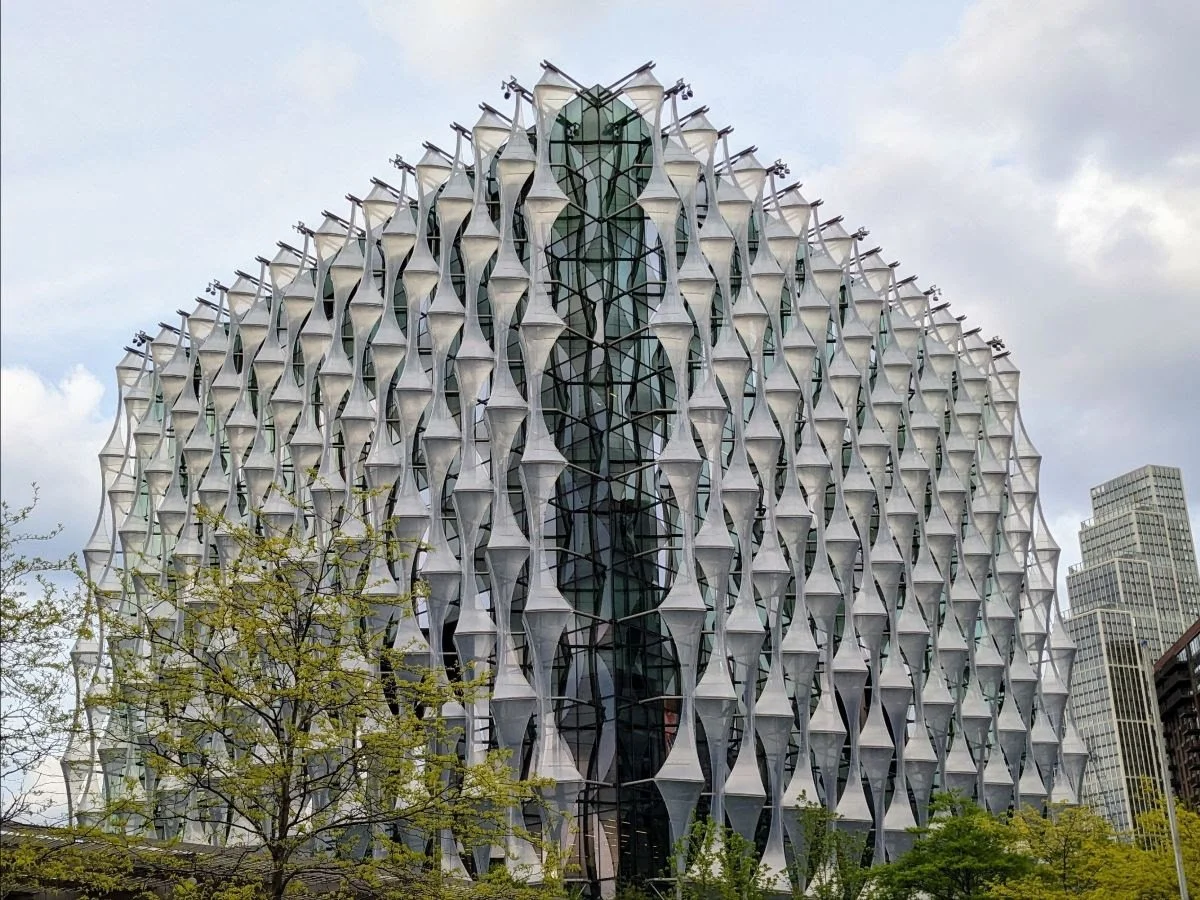
U.S. Embassy in London by KieranTimberlake (2018)
The spring 2025 issue of City Journal features an article by National Civic Art Society Research Fellow Theodore Dalrymple, “Ambassadors of Ugliness.” In his piece, Dalrymple focuses on an often-overlooked form of U.S. government architecture: American embassies and consulates.
For many people around the world, the only direct experience they have with the U.S. are our diplomatic facilities. These buildings are the most visible representations of our country. At their best, they should embody dignity, permanence, and respect for the architectural traditions of both America and the host nation.
Too often, Dalrymple argues, recent American embassies and consulates have done the opposite.
“The architecture of recent American embassies lacks beauty and dignity,” he writes. Embassy buildings, he continues, “are symbolic of their countries—their taste, power, ambition, prestige, and position in the world.” An ugly embassy, in Dalrymple’s view, suggests “an ugly country, or at least one without taste.”
In his article, Dalrymple examines several recent embassy and consulate projects, including the U.S. Embassy in London (pictured above), the new American consulate in Milan, and embassy projects in Lima, Beirut, and Hanoi. His essay raises a broader question central to NCAS’s work: whether government architecture should be judged only by security, function, and professional fashion, or also by beauty, dignity, and the public meaning of what America builds.
Dalrymple recalls Franklin Roosevelt’s 1939 observation on public architecture: “We are seeking to follow the type of architecture which is good in the sense that it does not of necessity follow the whims of the moment but seeks an artistry which will be good for all time to come.”
That standard remains a worthy one for American public architecture, at home and abroad.
Read the full essay in City Journal here.